Why You Lose Erection Without Stimulation Dr Tahira Rubab
Is It Normal to Lose Erection Without Stimulation?

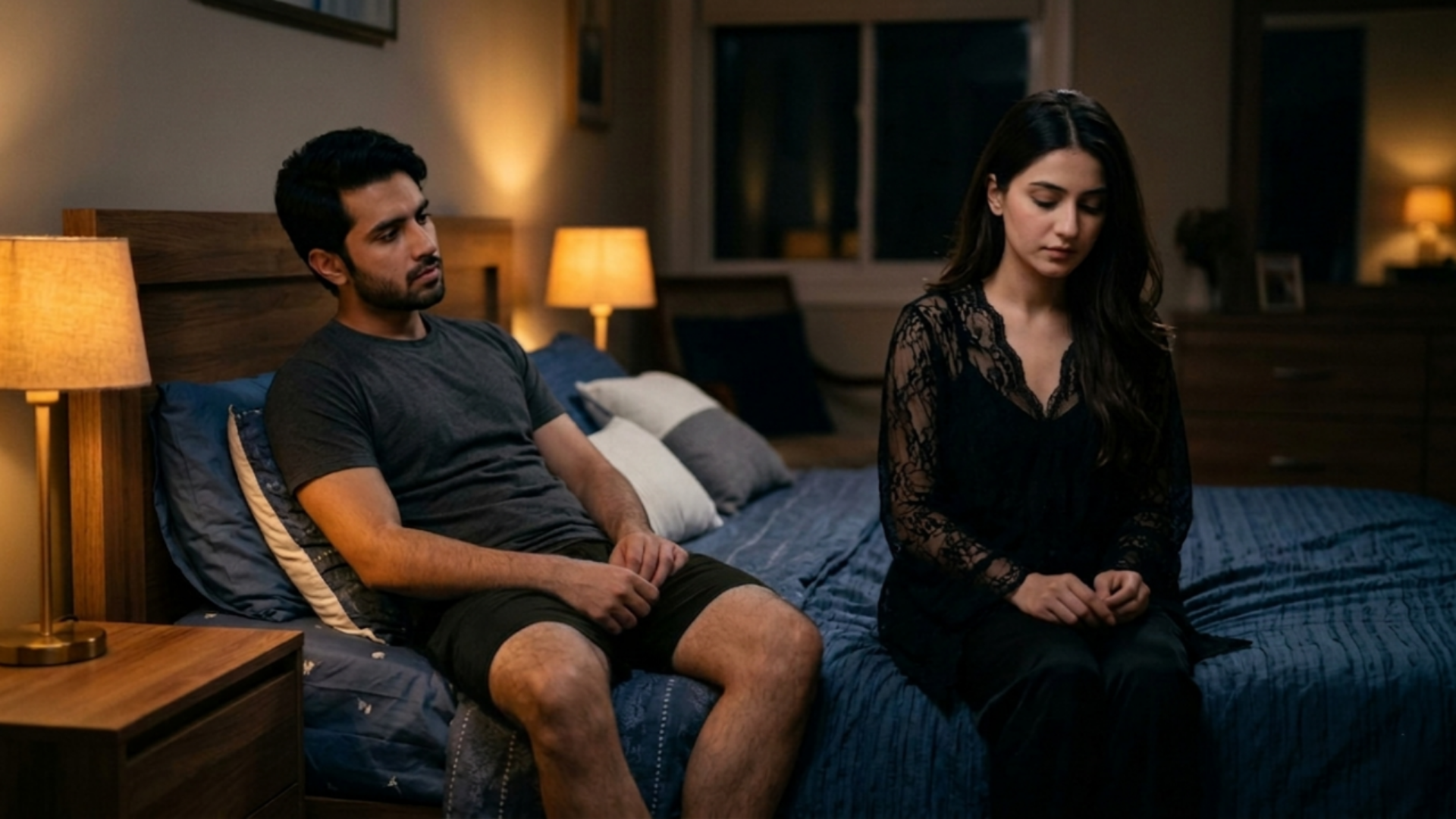
Why You Lose Erection Without Stimulation: Causes and Fixes
Dr. Tahira Rubab Consultant Clinical Psychologist
Why You Lose Erection Without Stimulation
Many men worry when they lose erection without stimulation and jump to worst-case scenarios and panic. They have every right to do so, but will be wrong most of the time. An erection is not a status that stays ‘on forever’. It’s a fluid, ongoing process influenced by blood flow, nerves, hormones and critically, continued arousal.
When stimulation stops, the body’s response is not to slam on the brakes, but to actually start the process of leaving the aroused state. Blood flow recedes, the muscles of the penis contract and it begins to relax and soften,which is why men lose erection quickly without stimulation in a way that can feel sudden for some men. While for others, seemingly instantly. Neither response is per se problematic.
The relevant question is not the speed of loss, but the strength and sustainability of the erection whilst stimulated, and its strength and stability sufficient for penetration. If an erection appears promptly upon touching, is responsive to arousing stimuli, and strong enough for penetration, then the rate at which it deflates after stimulation is unlikely to be of clinical significance.
The issue arises when the erection collapses virtually instantaneously even during intercourse, or seems incapable of re-establishment. This may be an indicator of underlying performance anxiety, a general lack of stimulation, impaired blood flow, hormonal causes or conditioning due to “overstimulation” due to habits such as frequent exposure to pornographic stimuli.
This should be considered carefully in context. Tiredness, sleep deficit, exhaustion, general stress, distractedness, relationship problems and other psychological and physiological causes can lead to diminished response. An isolated event is not a significant concern, while continuous drops may indicate a cause to be sought.
Is It Normal to Lose an Erection Without Stimulation?
Yes, it’s not an abnormal problem. Many men worry when they lose erection without stimulation, but the erect state is not something the body attempts to maintain forever. This is because a constantly sustained erection needs continuous stimulation. While there is any form of physical or psychological input, the signals from the brain will not cease. As a result the blood stays in the penis making it engorged, with a continuing stream of nerve impulses feeding the penis. The moment this input stops, the mechanism “shuts off”, the blood is permitted to drain from the penis, and there is some degree of immediate or gradual loss of firmness. This simply indicates how the arousal functions rather than there is something broken.
Some males report that they lose erection quickly without stimulation and get worried by the sensation. However, the fact is that, in the majority of these cases this simply indicates an easily excitable nervous system. Young males, in particular, may have heightened sympathetic nervous system activity and when this input stops there is likely to be a return to normal with the body assuming its relaxed state.
Any distraction perhaps anxiety or just a sudden shift in train of thought – for instance the male contemplating if he is getting as erect as possible and whether he will “perform well” may interrupt the arousal. This may result in a quick loss of rigidity in the penis and create a feedback loop where he starts observing himself which makes the situation even more worse.
What matters is not so much what happens when stimulation is withheld but what occurs when it is there. It could be indicative of physical and/or psychological problems if erection is very difficult or impossible during foreplay or sexual activity and if an erection occurs inconsistently and variably under different circumstances and conditions. In these circumstances, it would probably be best for you to mention the problem to a healthcare professional, since there could be underlying issues with hormones, blood circulation, and/or psychological or physiological issues.
When Is It Ok To Lose Erection Without Stimulation
There is not really a certain time span that you should be focusing on. Some men notice they lose erection without stimulation in seconds, while others are able to sustain a firm erection for minutes with no touching. All can be considered completely normal. This varies with how highly stimulated you were in the first place, how engaged your mind is while not being stimulated and the condition of your vascular system and its capability of retaining blood while it is not being fed signals with arousal stimuli.
Erections are not time controlled events but rather a feedback mechanism. They are proportional to how strong the stimulus was. The higher the stimuli the more the body wants to retain its erected state. However when input stops; there is really no reason why it should sustain the erected state.This is why some men lose erection quickly without stimulation while others experience a slow decline.
It is not a matter of how long it lasts in terms of time. The things that matter are these:
- Are you capable of achieving erection again if it were available?
- Can you maintain an erection through foreplay or intercourse?
- Have you experienced a change from how the norm was for you?
These are the important things to consider while evaluating if systems are functioning.
Your systems are functioning fine as long as an erection is attainable and capable of penetration during intercourse. The systems are not functioning only when you fail to reach proper erections consistently during sexual intercourse even with adequate stimuli and are unable to recover the erections after the stimulation is reinitiated.
How Erections Work: The Excitement Phase Explained
It begins in the brain. Upon receiving excitation from factors such as sexual thoughts, sight, or sound, impulses are sent down the spinal cord and via pelvic nerves to activate the nitric oxide, the switch in question. This causes relaxation of the smooth muscle inside the Corpora Cavernosa, the two spongy, sac-like cavities which form the two ‘bulges’ that run along the length of the penis. With relaxed muscle, the penis can now absorb more blood as the arteries enlarge and Corpora Cavernosa expand, but the flow of blood away from the penis is restricted as the veins are compressed. With no exit for the blood, the penis can be kept firm. As long as the blood trapping sustains, the erection will be held.
However, this system relies greatly upon disruption. The second sexual thought is turned off or if someone’s thoughts wander, the sympathetic nervous system begins to dominate the parasympathetic; smooth muscle constricts and veins regain their normal size, leading to an erection loss. This is why some people find that their erection goes away without stimulation. A significant disturbance is not necessarily a requirement for the penis to go soft. A simple concern, a distraction, or a degree of self-monitoring are sufficient to initiate sympathetic dominance and terminate the process in seconds.
Causes Why You Lose Erection Quickly Without Stimulation
Physical Causes
Most men can maintain their erection for a time period that is not considered an anomaly. However, other men are not able to sustain their erection due to the physical causes mentioned below:
- Mild vascular inefficiency: Maintenance of erection relies on high blood flow into the penis. If the vessels have undergone early stage deterioration, then although the blood will enter the penis to achieve an erection, sustaining it might become problematic. Less stimulation (not necessarily vigorous or persistent) can cause the pressure within the penis to drop more quickly than expected. Therefore, some men find that erection goes away without stimulation and this in turn might point to early signs of impaired arterial function, even in the absence of other overt symptoms.
- Venous leak: This is defined as a failure on the part of the veins to trap blood in the penis. This results in a state where the person is able to get an erection but maintaining it is not possible without consistent, sustained stimulation. True venous leak is less frequent than often perceived but, if present, displays an easily recognisable pattern.
- Hormonal factors: Testosterone influences the strength of desire, and the entire process of erection generation with regard to how intense the entire arousal is. Deficiency in testosterone leads to low desire, and weak erections requiring sustained stimulation for longer periods. As a result, men may find themselves losing erection without ejaculation and firmness feels reliant on stimulation rather than spontaneous.
- Cardiovascular And Metabolic Problems: Factors such as diabetes, hypertension, smoking have a detrimental effect on vascular performance and a progressive reduction in arterial elasticity and function. It is common for the signs of arterial deterioration to not be evident in the beginning. However as the time goes on, men with these conditions and/or habits require sustained effort in stimulation after the erection is initially achieved.
The key pattern in these instances is constancy. An erection that consistently fails regardless of context (with a partner, or through masturbation etc, during any degree of sexual stimulation) requires investigation.
Psychological Causes
Often, the mind takes charge of things. The erection system is very much driven by the psychological aspect and minute variations in mood or concentration are enough to nullify what is happening physically.
- Performance anxiety: This is perhaps one of the more prevalent causes. The moment you begin to judge whether or not your erection is firm as opposed to being lost in pleasure you automatically enter into a mode of monitoring. This is mediated by your anxious pathways and sympathetic nervous system, which directly opposes the erectogenic system. You cannot be in a relaxed state of arousal and self-monitoring at the same time; they negate one another and therefore you might experience that your erection goes away without stimulation.
- Concentration on firmness: Every time that you are ‘checking’, asking whether or not your erection is firm enough, you are not focusing on the sexual sensations. It takes you away from what is occurring physically and the stimulation you are getting from it. Arousal necessitates submersion into the physical world and cannot be induced while one’s head is still elsewhere and assessing what is happening. Once the mind has turned inward, the body will almost invariably follow; and you may find yourself losing erection without ejaculation as the feedback loop is disrupted, leading to a vicious cycle.
- Catastrophic thinking: If a man experiences a loss of erection during sexual intercourse with a partner, he just automatically starts assuming that it will definitely happen in the next sexual encounter. The anticipation alone is sufficient to induce the event of failure as your brain has already formulated and predicted what is likely to occur.
- Stress: This, in my opinion, is enormously underestimated. In today’s fast-paced world, there is a tremendous cognitive load involved, which directly antagonizes the erection system. Worries from work, the home, tiredness and general stresses are sufficient to cause a reduced response in impulses sent to the body necessary for a stiff erection.
If the erection functions normally during masturbation, but you struggle with it while being with your partner, or the issue appears suddenly out of nowhere, with no pathological underlying physical condition, suggests a psychologically generated problem. This does not necessarily mean that there is something wrong with you ‘psychiatrically’. It suggests that the entire erection process is very sensitive to everyday life events.
Situational Patterns to Notice
A pattern is far more indicative of a diagnosis than any one symptom alone. The exact same symptom may be attributable to completely disparate causes. Therefore it is crucial to note when you tend to lose erection without stimulation.
Does it happen primarily when the stimulus is removed?
If you ind that erection only appears when there is presence of stimulus and fades as soon as the stimulus is removed, this is primarily normal physiology. This is because the stimuli haven’t turned on the system enough for the cycle to get well underway. Therefore it is common for men to lose erection quickly without stimulation and not a cause for concern.
Is it with a partner and not during masturbation?
This is one of the most obvious dichotomies we can discover. If you are having strong, sustained erections while masturbating, but flaccid ones with a partner, the most likely culprit is psychological; you are most likely not encountering a physical impediment here.
Is there an acute and or gradual onset?
Acute indicates likely psychogenic etiology. Any single upsetting event or a particularly bad anxious experience may push the man over the edge. Gradual deterioration of erections is typically the domain of the physiological changes due to structural, vascular or metabolic changes.
Is there an erection during sleep and/or upon awakening?
These two situations really only suggest that the physiological system itself is intact. These situations preclude arguments that an irreparable cause is responsible. They provide proof that erection itself is possible in the body.
Does erection begin again easily with stimulus reapplication after it begins to fail?
Again, normal physiology is likely at play if after onset of failure of erection there is quick reinstatement after the application of stimulus. Recurrent episodes with a particular difficulty in regaining erection, within the same encounter, point toward a combined problem of anxiety and reduced physiological capacity.
If the body is capable of attaining erectility and maintaining it via masturbation or night-time tumescence, yet this capacity is diminished under the conditions presented by partnered sexual intercourse, it stands to reason that a variable not intrinsically related to the capacity for erection must be responsible. This is to say, a psychogenic variable related to the circumstances of the interaction is the most likely cause. If erection is failing across all circumstances (partnered sex, masturbation and nighttime), and progressively worsening then, medically, we have a different problem than psychological inhibition.
Venous Leak Versus Psychological Loss In Erection
What if rapid erection collapse is vascular? The “venous leak” is an exceedingly popular phenomenon to search on the internet, and possibly, the most misunderstood condition. The reason for this is that a true venous leak means that the blood enters the penis to make it erect, and the initial erection is achievable. But the compression of beings taking the blood away from the penis is compromised. This makes the process of erection maintenance difficult. Like mentioned before, it is necessary for the blood to stay trapped in order to maintain the erection and compromised veins don’t help with that.
A venous leak diagnosis must be more than simply guesswork or speculation. The usual route of treatment would be a Doppler penile ultrasound, with drug-induced erection in order to monitor blood flow into the penis, pressure, and closure of veins. Claims to a venous leak diagnosis without such tests should be taken as speculation.
The appearance of both anxiety-related loss of erection and venous leak on the surface is the same; erection then sudden loss. However, you can’t go by appearance to determine if it was a venous leak or stress related erection drop. In psychogenic drop, the problem is that the body comes out of a state of arousal and alters blood flow often resulting in losing erection without ejaculation. Whereas in a venous leak there might be an existing high level of arousal, but the actual structure may simply not be adequately holding blood.
It was important to make the distinction clear, since the treatment for both is entirely different. A true venous leak almost always requires a medical procedure to fix the issue. Whereas a psychologically induced erection drop is addressed via a completely different set of techniques which I will discuss later. Venous leak is far from the commonly believed culprit in online web searches. It is a fairly rare condition, especially for non-diabetic/cardiovascular young men.
How to Stop Losing Erection Quickly Without Stimulation and Otherwise (Practical Strategies)
If you lose erection without stimulation several simple, immediately applicable steps can make a difference in how stable and sustainable the erections feel. These techniques may be especially useful when the problem is due to stimulation patterns or more arousal dynamics:
- Continuous stimulation through early arousal: The initial phase of erection is fragile. If you stop stimulating too soon, a firm erection may never even reach its peak, let alone sustain itself. Steady physical touch, communication, and attention can produce stronger erections that are more readily maintained.
- Deep, slow breathing to reduce sympathetic activation: Short, shallow breathing is a body’s way of signaling that it is under threat. Taking deeper breaths does the opposite. They are believed to facilitate the shift of the nervous system into the more relaxed parasympathetic response, which benefits erections. This effect can be so powerful that it can also prevent the steep drop in erection quality.
- Non-monitoring of erection quality: The moment you worry about the erection’s stability, you disrupt it. Consider the erection itself as an emergent, secondary property and not the goal. Focusing on the sensation, the other partner, and sexual pleasure allows you to maintain a state of flow, which directly impacts erection sustainability.
- Pelvic Floor Exercises: In order to sustain the erection, the blood needs to be retained in the corpus cavernosum, and pelvic floor muscles are involved in doing so. Weakness in these muscles may be contributing to loss of erection. Strong pelvic floor muscles hold blood inside erectile tissues preventing flow away. Training these muscles has a positive impact on erectile control.
- Improving Sleep & Reducing Alcohol Use: Alcohol and poor sleep reduce our sympathetic tone. While the impact of this is often not obvious, it can subtly damage the erectility functions: Both alcohol and inadequate sleep diminish the capacity of your vascular and neural tissues to function efficiently and support erections.
- Boosting Cardiovascular Fitness: Efficient cardiovascular fitness is fundamental for the vascular component of erection. A better cardio fitness means better circulation, reduced latency and possibly increased sustainment time of erections. It improves overall erectile quality by creating optimal conditions for better blood flow into the pelvic region and retention within the penile tissues.
In many cases, merely decreasing the pressure and anxiety surrounding your erections can go a long way in bringing back more reliable erection patterns. Since your nervous system is not under attack by itself, the body usually reverts back to normal function.
When to See a Doctor
You need to be able to recognize your symptoms as they relate to your health in general. Although many erection problems are transient or situational, but certain patterns suggest the involvement of underlying disease processes:
- You have erection problems in different situations and contexts: If you consistently fail to achieve an erection that is firm enough during sex and other sexual stimulation, as well as during masturbation or other forms of sexual activity, the cause is physical rather than psychogenic. Persistent erection difficulties in varied sexual scenarios should lead one to consider physical causes.
- You have less morning/nocturnal erections: In the absence of other problems, a man should have regular, spontaneous morning and nocturnal erections and that is proof of his physiology for achieving a normal erection. Having fewer morning/nocturnal erections could be a hint towards a hormonal or vascular problem.
- The problem is new and no psychological causes are obvious: If the onset of erection fading is rapid and not attributable to any psychological cause (e.g. relationship problems, stress, anxiety), a neurological, vascular or endocrine issue is more likely and should be promptly investigated by a healthcare professional.
- You show symptoms of low testosterone levels: Men who have lower than normal levels of testosterone are often suffering from problems such as fatigue, loss of muscle mass, decreased libido and changes in mood. You should have your testosterone level measured because it could be the reason for your erection problems.
- You have risk factors for vascular disease: Men with underlying risk factors for vascular disease such as diabetes, hypertension, hyperlipidaemia, smoking and a family history of heart disease should be evaluated for erectile dysfunction. ED can precede way before other obvious cardiovascular issues.
If you consistently lose erection without stimulation across various contexts, it is often best to consult a healthcare professional. Below is a short guide that will help you in getting mentally prepared for what to expect.
What evaluation of erectile dysfunction entails: An initial medical history focusing issues as lifestyle is undertaken by your physician. Blood tests may be carried out to test your testosterone and hormone levels. Specialized vascular testing such as a Doppler ultrasound of the penis (to determine blood flow through the blood vessels of the penis) is sometimes recommended. These tests, the medical history, the physical exam and the above factors lead the physician to diagnose psychogenic, hormonal or organic/structural erection problems and begin an appropriate treatment strategy.
A visit to your physician is not a sign that something is wrong but a logical first step in efficiently determining the reason for your erection problems so that they can be treated quickly.
Treatment As Appropriate
The most appropriate treatment will obviously be reliant upon the underlying etiology for losing erection without ejaculation, and symptoms will rarely respond if not properly investigated and managed. When an etiology is found, the approach becomes much more specific.
- PDE 5 inhibitors: Oral medication such as sildenafil and tadalafil improve vascular flow into the penis and hence augment the vascular aspect of erection. They will likely be effective where minor arterial insufficiency and/or venous leakage is causing a rapid detumescence, augmenting natural erection with the appropriate arousal stimulus.
- Topical Support Options: Other non-prescription topical supports such as Mythica Oil may be explored as supplemental treatments in some patients. Such supports are generally utilized to enhance local circulation, level of sensation, and confidence with intercourse. They are adjuncts, and should not substitute for proper medical care. They can support behavioral techniques, especially for individuals with situational erection problems.
- Hormonal correction: Loss of libido and impaired sexual function might be occurring due to hormonal deficits such as low testosterone levels. These should be managed carefully with regulated hormone replacement therapy. This improves erection quality, libido and sexual responsiveness.
- Cardiovascular risk management: Since erection is essentially a vascular phenomenon, improving general cardiovascular health invariably produces improvement in erectile quality. Management of smoking, blood pressure, lipids and glucose levels, along with a healthy lifestyle ensures improvement in vascular health and sexual functioning. Where applicable, medication can be prescribed for underlying cardiovascular disease.
- Structured sex therapy: Most instances of sexual loss of erection without underlying organic etiology respond to structured sex therapy. This includes cognitive behavioral techniques, desensitization exercises, and reconditioning of sexual response cycles in a positive manner. This interferes with worry and anticipation loops, thereby addressing the psychological element.
- Combination approaches: Many cases benefit from a combination of therapies such as PDE5 inhibitors and healthy lifestyle factors and/or structured sex therapy. Here mild vascular pathology is addressed alongside the psychological aspect. These targeted approaches are often more successful than only treating the visible symptoms. The overall goals go far beyond provision of an erection to restoration of a sexual response and confidence under all circumstances.
Key Takeaways
I have previously discussed in detail that erections are sensitive phenomena. They are transient events that you may not have full control over once achieved. In most cases where erection goes away without stimulation it is perfectly normal. The failure to achieve rigid and/or maintained erection on adequate input (alone or with a partner) or to lose erection quickly without stimulation continually regardless of context, however often signal a physiological or psychological problem. Whether that is hormonally mediated or via some other technique is where most of the attention needs to be focused.
Most men would find that with knowledge of the mechanism of the erections, proper management and reassurance would restore function by focusing on adequate stimulation, maintaining appropriate breathing control, focusing on the arousal component rather than the rigid aspect, and ensuring appropriate physical health. However, problems should be investigated through proper medical channels, diagnosed and treated appropriately either physically or hormonally.
FAQs
Q1: Why am I losing my erection quickly?
Answer: It is often a result of stimulation failure, distractions from within or of performance pressure and anxiety. Mild vascular incompetence and even stress and fatigue can be factors.
Q2: How to stop losing an erection fast?
Answer: Stay in your head, stop worrying and counting, maintain stimulation and control your breathing to alleviate anxiety.
Q3: Is it normal to lose an erection quickly?
Answer: Yes, particularly when stimulation is removed. It does not always mean that there is a problem.
Q4: Why do I lose my erection so quickly?
Answer: Often it is because of the decreased stimulus, anxiety, or distracted thinking.
Q5: Is losing erection quickly without stimulation normal?
Answer: Yes, it is normal physiology. Without continued stimulation, the erection fades.
Q6: How can I stop losing my erection fast?
Answer: Concentrate on feeling and not the performance, sustain stimulation and reduce pressure.
Q7: Why does my erection go away so fast?
Answer: Most likely it is because the stimulation wore off and/or because your head got out of the game. A particularly significant factor in this case is nervousness or over-thinking.
Q8: What causes an erection to suddenly go away?
Answer: This can happen due to a switch from arousal to stress response, disturbance, distraction or break in stimulation.
Q9: Why do I suddenly lose my erection?
Answer: It almost always has something to do with the mind: sudden loss of stimulation, an interruption, performance anxiety, or worrying about your erection itself.
Q10: What causes sudden loss of erection?
Answer: It is often a result of psychological interruption, fight or flight reaction, or decrease in stimulation.
Q11: What causes sudden erectile dysfunction?
Answer: It is usually due to psychological factors such as stress, anxiety, or negative sexual encounters. Physical causes of ED normally appear gradually.
Q12: How fast is it normal to lose an erection?
Answer: There is no set time. It can happen within seconds or several minutes. Both cases can be normal.
Q13: Why do I lose my erection all of a sudden?
Answer: It is often due to a psychological issue, either because something is disrupting your attention at that instant or you are worried too much about the situation.
Q14: What causes a sudden loss of erection?
Answer: It is often a psychological issue; worry, stress or a change in concentration can cause arousal to “switch off”.
Q15: Why am I only getting semi-hard?
Answer: This is typically due to low arousal, worry, low stimulation or a reduced flow of blood. If this is long-term then hormone or vascular problems could be the reason.
Q16: How do I fix my weak erection?
Answer: The first step is to work out why it’s happening. It might be psychological, vascular or hormonal. Treatment will vary according to the cause.
Q17: How do you fix a weak erection?
Answer: Identify and address the root cause. It might involve lifestyle changes, psychotherapy, or a urologist visit.
Q18: How to get a strong erection?
Answer: You can achieve a strong erection through sufficient stimulation, enhanced mental involvement, adequate blood flow, and low levels of anxiety.
Q19: How do I get rock hard again?
Answer: Restore stimulation, relax mindset and keep pressure out of the mix. Firm erections are a result of arousal, not brute strength.
Q20: What are the signs of a weak erection?
Answer: The following indications will be apparent: your erection is not strong enough, and even if it is, it can not be sustained during sex, and your performance might be irregular.
Q21: Is it normal to lose an erection easily?
Answer: Yes, especially in lack of stimulation. It should be worrisome only when it happens repeatedly during sexual intercourse.
Q22: Why do I need stimulation for erection?
Answer: This is because the penis only gets a “go” signal from the stimulation. If you take the signal away, the penis goes flaccid.
Q23: Is it normal to not get an erection without stimulation?
Answer: Yes. An erection is not supposed to occur or remain without some sort of arousal.
Q24: Is it normal to lose erection without stimulation?
Answer: Yes it is. That is how the system works.
Q25: How long should an erection last without stimulation?
Answer: There is no fixed amount of time. It can last for seconds, or many minutes. All are normal.
Q26: Loss of erection during the excitement phase is a sign of?
Answer: It is most often a sign of performance anxiety, lack of concentration, or inadequate arousal. Occasionally, an early problem of a vascular or hormonal nature.
Q27: What is the excitement phase a sign of?
Answer: It is a sign of a normal erectile function i.e. the bodies’ reaction to nerve and brain signals from being aroused.
Q28: How to increase erection?
Answer: Increase stimulation, overcome worrisome thoughts and anxiety, maintain focus, get a good night’s sleep, be physically fit and address any health problems.
Q29: How to increase erection power?
Answer: Strengthen your cardiovascular system, enhance your pelvic floor muscles, enhance your sleep, manage your stress, and ensure that you become properly aroused.
Q30: How to improve erections?
Answer: You can improve erections through improved sleep, exercises, stress control, and a healthy vascular condition.
Q31: How can a man regain his erection?
Answer: By rediscovering his sexual excitement, relaxing his mind, and optimizing his physical and psychological state.
Q32: How can I regain erectile strength?
Answer: Optimize cardiovascular health and relaxation, and ensure adequate sexual stimulation.
Q33: How to make penis strong and healthy?
Answer: You can do this by taking care of your heart, staying active, getting enough sleep, not smoking, and avoiding excessive stress.
Q34: How to get 100% erection quality?
Answer: Achieving this requires maximizing the level of arousal, minimizing anxiety and keeping fit, being ‘switched on’ but not overly aware of the actual mechanics of erection.
Q35: How to fix losing an erection?
Answer: Enhance stimulation, decrease stress, or seek professional help to address underlying causes.
Q36: How can I fix my lack of erection?
Answer: It depends on the cause. If it occurs across multiple different situations and partners, an evaluation by a healthcare professional is necessary.
Q37: What is venous leakage?
Answer: It is a situation when blood is not able to be trapped inside the penis which makes it hard to keep up an erection even if it is erected for a while.
Q38: Does venous leak happen suddenly?
Answer: No, venous leak is a gradual process. It is not a series of isolated events, rather follows consistent patterns.
Q39: Is venous leakage permanent?
Answer: Venous leak can be permanent but its severity varies greatly. Diagnosis needs to be made for the venous leak to be classified as permanent.
Q40: What is the venous leak exercise?
Answer: Exercises of the pelvic floor muscle may enhance erections, but will not cure a real venous leak.
Q41: What is venous leak treatment?
Answer: Diagnosed venous leak cases are treated surgically or medicinally following appropriate investigation with methods such as doppler scans.
Q42: Can venous leak be cured naturally?
Answer: There is no known natural remedy that can cure venous leak. Although changes to the lifestyle can help improve the general function of the penis, they will not cure it.
Q43: What is the permanent cure for erectile dysfunction?
Answer: Based on cause, there are fully reversible conditions and those that need long term management rather than cure.
Q44: What causes loss of erection in men?
Answer: It could be due to psychological factors, vascular problems, hormonal disturbance, lifestyle habits or certain medical conditions such as venous leak.
Q45: How do I stop losing my erection?
Answer: Maintain stimulation throughout intercourse and try to avoid “performance pressure.”
Q46: How do I get my lost erection back?
Answer: Reintroduce the stimulation back, relax, and focus on the sensations.
Q47: How do you fix a quick erection problem?
Answer: It depends on the cause. Most causes of rapid erection loss can be improved by increasing arousal, lowering anxiety, and taking care of your overall health.
Q48: Why am I losing my erection?
Answer: The erection only lasts as long as you remain physically aroused or mentally stimulated. If the stimulation or mental arousal declines, so will the erection.
Author: Dr Tahira Rubab Hafeez
Call for appointments at +923111714470