Driverless Vehicle Successfully Tested in Pakistan by NED University of Engineers
Driverless Vehicle Successfully Tested in Pakistan by NED University of Engineering and Technology Engineers

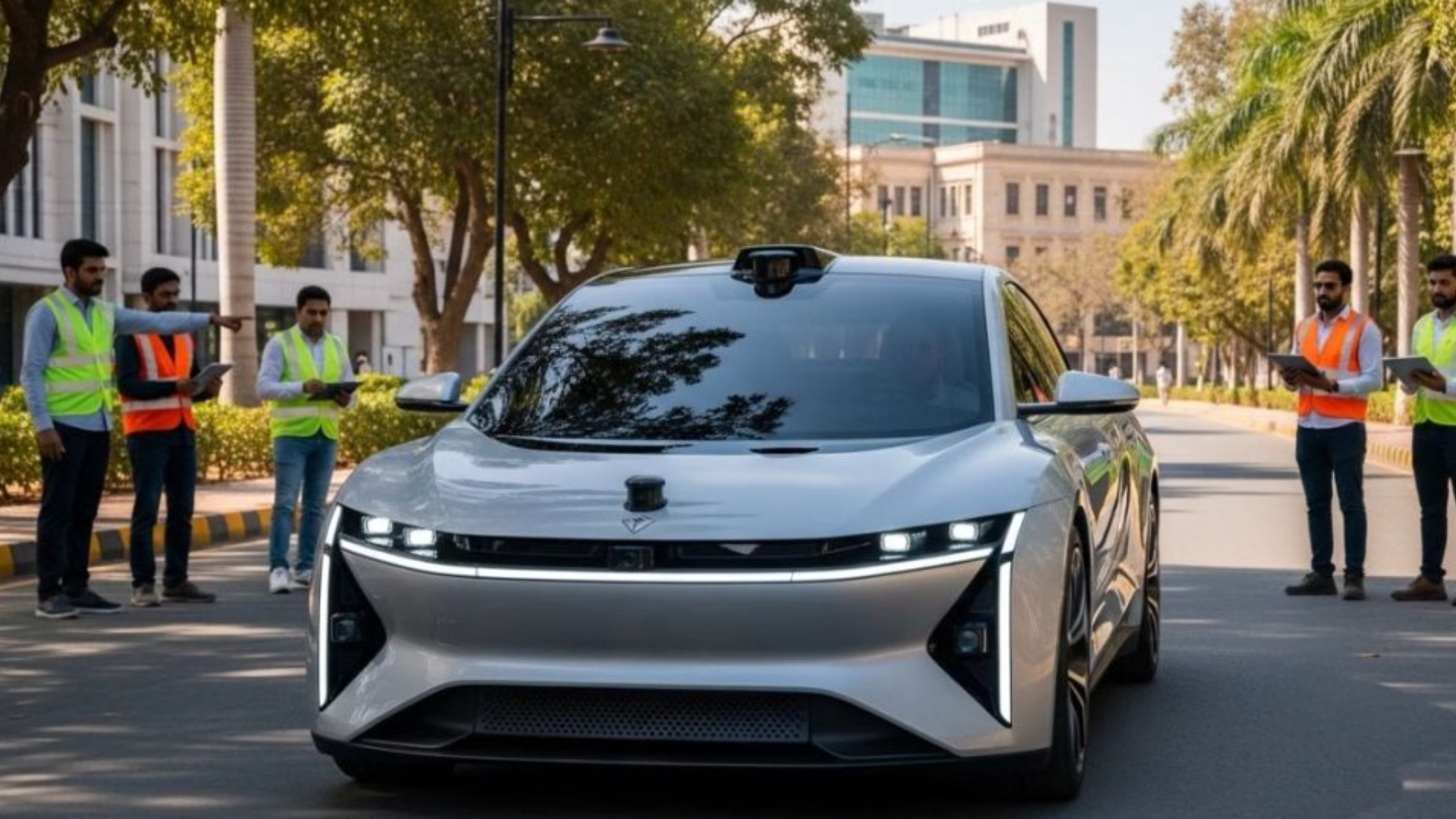
Driverless Vehicle Successfully Tested in Pakistan by NED University of Engineers
A meaningful milestone has just been achieved in Pakistan’s tech space. Engineers from NED University of Engineering and Technology have successfully tested an AI-powered driverless vehicle — something that puts the country on the map in autonomous mobility research.
🔍 What exactly is this vehicle?
This isn’t just a normal electric car. It’s a fully autonomous system that:
- Drives itself without human input
- Uses artificial intelligence to make real-time decisions
- Continuously learns from its environment
In simple terms, the “driver” is software.
AI-Powered Electric Vehicle Developed Under National Center for Artificial Intelligence Achieves Major Breakthrough in Karachi
How the system works
The vehicle is built around a smart decision-making system developed under the National Center for Artificial Intelligence.
It combines:
- Sensors → detect obstacles and surroundings
- Cameras → provide visual input
- GPS → tracks location and navigation
All this data is processed instantly, allowing the vehicle to:
- Stay on track
- Avoid obstacles
- Adjust speed based on conditions
Key features
- Electric vehicle (EV) platform
- Range: ~200 km per charge
- Backup system: 8–9 hours
- Current speed: 20 km/h (for testing phase)
- Adaptive speed control depending on road
Current testing phase
Right now, the vehicle is being tested inside a controlled environment (university campus). This is standard practice before moving to public roads.
It allows engineers to:
- Train the AI safely
- Improve navigation accuracy
- Handle edge cases (unexpected obstacles, pedestrians, etc.)
Autonomous Car Uses Sensors, Cameras, and GPS; Offers 200km Range and Campus-Based Testing at 20 km/h
🇵🇰 Why this matters for Pakistan
This project is more than just a prototype. It signals:
- Growth in AI and robotics research
- Movement toward smart cities
- Potential for local innovation instead of imports
- Foundation for future industries like:
- Autonomous transport
- Delivery systems
- Smart logistics